
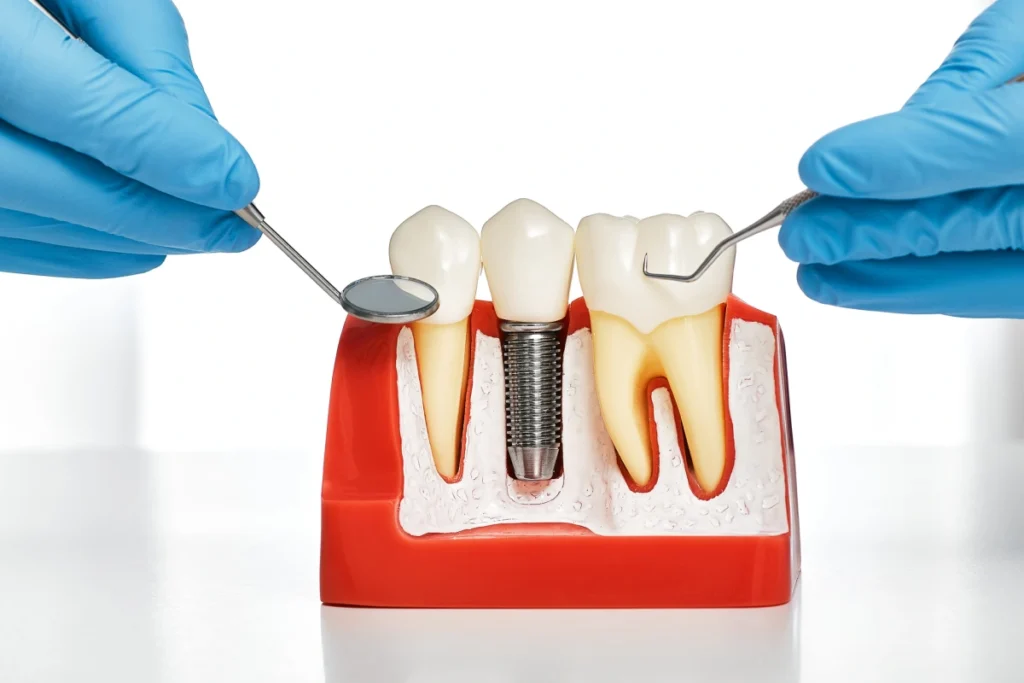
Losing a tooth, whether from decay, injury, or infection, can feel overwhelming. Beyond the cosmetic concern, it affects how you eat, speak, and carry yourself with confidence. The good news? Modern dentistry has made it possible to replace a missing tooth faster than ever before. Dental implants have long been the gold standard for tooth replacement, and with immediate implant placement, many patients can leave the dental chair with a new tooth in a single visit.
But how exactly does this procedure work? Is it safe? And is it right for you? This guide walks you through everything, step by step, in plain language.
What Is Immediate Implant Placement?
Traditional dental implants involve a multi-step process spread over several months extraction, healing, implant surgery, more healing, then the final crown. Immediate implant placement compresses much of this timeline by placing the dental implant into the extraction socket on the same day the damaged tooth is removed.
This approach has gained widespread acceptance among dental professionals thanks to advances in implant design, surgical techniques, and digital imaging. When done with proper patient screening and precision planning, the outcomes are highly predictable and the patient experience is significantly improved.
Am I a Good Candidate for Dental Implants?
Before diving into the procedure itself, it’s important to understand who qualifies. Not every patient is a candidate for same-day placement. At TruYou Dental in Great Neck, NY, our team conducts a thorough evaluation before recommending this approach.
You may be a strong candidate if:
i) You have a tooth that needs extraction but the surrounding bone is healthy and intact
ii) You do not have active gum disease or uncontrolled infections
iii) You have sufficient bone volume at the extraction site
iv) You are a non-smoker or willing to quit during healing
v) You are in generally good systemic health (well-controlled diabetes, for example, may still be compatible)
Certain conditions severe bone loss, active infection, or compromised immune function may require traditional staged implant therapy instead.
Step-by-Step: How the Immediate Implant Procedure Works
Step 1: Comprehensive Evaluation and 3D Imaging
Everything begins with a detailed consultation. Your dentist will take cone beam CT (CBCT) scans, which are 3D X-rays that map your jawbone, nerves, sinuses, and surrounding anatomy with remarkable precision.
This imaging is critical. It tells us the exact dimensions of the bone available, the ideal implant angle, and whether immediate placement is feasible all before a single instrument touches your mouth.
You’ll also discuss your medical history, medications, and smile goals. This is a collaborative process, not a one-size-fits-all procedure.
Step 2: Treatment Planning and Implant Selection
Using the 3D scan data, your dentist plans the implant placement digitally. This includes selecting the right implant size and design to achieve primary stability the firm, immediate contact between the implant and bone that is essential for same-day success.
In some cases, a surgical guide is fabricated. This is a custom-made device worn in the mouth during surgery that ensures the implant goes in at precisely the planned angle and depth like GPS for your jaw.
Step 3: Extraction of the Damaged Tooth
On the day of surgery, the compromised tooth is carefully extracted with minimal trauma to the surrounding bone and gum tissue. This is intentional preserving the socket walls protects the foundation for the implant.
Local anesthesia is used throughout, and sedation options are available for anxious patients. Most people are surprised by how comfortable the experience is.
Step 4: Socket Preparation and Implant Placement
The extraction socket is gently cleaned and evaluated. The dentist then carefully prepares a precise channel within the socket using specialized drills slightly smaller than the implant itself.
The dental implant (a small titanium post) is then inserted into this channel. Titanium is used because it is biocompatible, meaning the body accepts and integrates with it naturally over time through a process called osseointegration.
Achieving strong initial stability at this stage is critical. The implant must be firmly anchored like a screw seated tightly into wood to withstand the early healing period.
Step 5: Bone Grafting (When Needed)
After implant placement, there is often a small gap between the implant surface and the socket walls. This space is typically filled with a bone graft material often derived from natural or synthetic sources to promote bone regeneration and minimize post-extraction bone loss.
This step protects both the long-term stability of the implant and the natural contour of your gum tissue.
Step 6: Provisional Restoration (Temporary Crown)
One of the most appealing aspects of immediate implant placement is the possibility of placing a temporary crown on the same day. This means you leave the office with something that looks and functions like a tooth.
However, this provisional restoration is not meant for heavy chewing. It is shaped and adjusted so that it does not receive direct biting pressure, protecting the implant while osseointegration occurs over the next three to six months.
Step 7: Healing and Osseointegration
Over the following months, the implant fuses with your jawbone at a microscopic level. This is a natural biological process that requires no action on your part just following your post-op care instructions.
You’ll return for periodic check-ups to monitor healing. Most patients go about their daily lives normally during this phase.
Step 8: Placement of the Final Crown
Once integration is confirmed typically through X-rays and a clinical exam, the temporary crown is replaced with your permanent, custom-fabricated porcelain or zirconia crown. This is matched in color, shape, and size to your natural teeth for a seamless result.
The end result? A tooth that looks, feels, and functions just like the real thing.
What to Expect After the Procedure
The recovery from immediate implant placement is generally mild. Most patients experience:
Mild soreness and swelling for the first two to three days
Minor bleeding at the site, which resolves quickly
Manageable discomfort controlled with over-the-counter pain relievers or prescribed medication
You’ll be advised to eat soft foods, avoid smoking, and maintain careful but gentle oral hygiene. Our team at TruYou Dental will provide detailed aftercare instructions tailored to your situation.
Why Choose Dental Implants Over Other Options?
Dental implants are not the only tooth replacement option, bridges and dentures exist, but they are widely regarded as superior for most patients. Here’s why:
Bone preservation: Implants stimulate the jawbone, preventing the bone loss that occurs after tooth loss
Longevity: With proper care, implants can last a lifetime
No impact on adjacent teeth: Unlike bridges, implants don’t require grinding down neighboring healthy teeth
Natural feel: Most patients forget the implant is even there
Real Patient Questions, Answered
Take the Next Step Toward a Complete, Confident Smile
Immediate implant placement is a remarkable advancement in modern dentistry, one that allows patients to move through the tooth replacement process with less disruption to their daily lives, fewer appointments, and outstanding long-term results.
If you’re dealing with a failing tooth, have recently experienced tooth loss, or simply want to explore your options, the team at TruYou Dental – Great Neck is here to help. We combine advanced technology, personalized care, and genuine expertise to guide you through every step of the journey.
Schedule your consultation today and discover whether immediate dental implant placement is the right choice for you. Our Great Neck, NY office is welcoming new patients and we’d love to be part of your smile story.