
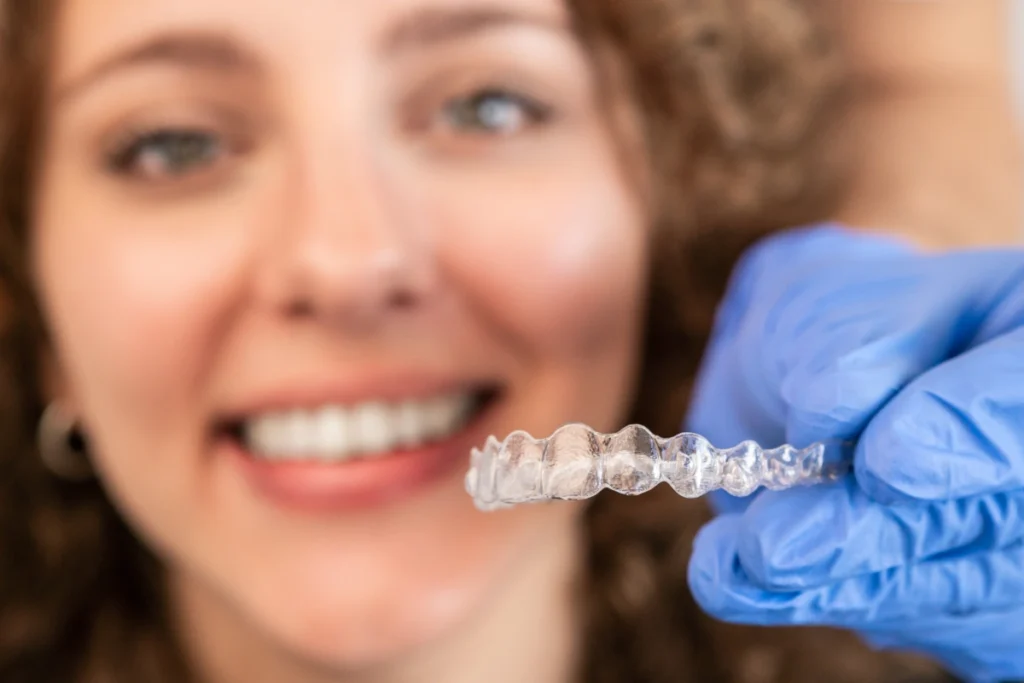
If you’ve been told you have an overbite or underbite, you’re not alone. Millions of Americans live with these common bite issues — and many of them assume traditional metal braces are their only path to a straighter, healthier smile. The good news? Invisalign has changed the game. This innovative clear aligner system can effectively correct both overbites and underbites, all without the brackets, wires, and lifestyle restrictions that come with conventional braces.
At TruYou Dental, our teams in Franklin Lakes, NJ and Great Neck, NY help patients achieve confident, functional smiles using Invisalign every day. In this guide, we’ll break down exactly how Invisalign works to address these bite problems and whether it might be the right solution for you.
What Are Overbites and Underbites?
Before diving into treatment, it helps to understand what these terms actually mean.
Overbite
An overbite (sometimes called “buck teeth” or an excessive overjet) occurs when the upper front teeth overlap the lower front teeth more than they should. A small amount of vertical overlap is completely normal — about 1 to 3 mm is considered ideal. However, when the upper teeth significantly extend over the lower teeth, it’s classified as a malocclusion (a misalignment of the bite).
Overbites can be:
- Dental — caused by tooth positioning or crowding
- Skeletal — caused by jaw structure (the upper jaw protrudes or the lower jaw is underdeveloped)
Underbite
An underbite is essentially the opposite: the lower front teeth sit in front of the upper front teeth when the mouth is closed. This gives the lower jaw a more prominent appearance. Like overbites, underbites can be dental or skeletal in origin.
Why Does It Matter?
Both conditions go beyond cosmetics. Left untreated, overbites and underbites can lead to:
- Uneven tooth wear and enamel erosion
- Jaw pain and temporomandibular joint (TMJ) disorders
- Difficulty chewing or speaking clearly
- Increased risk of tooth damage or cracking
- Self-consciousness about one’s appearance
Getting treatment isn’t just about looking better — it’s about protecting your long-term oral health.
How Does Invisalign Work?
Invisalign uses a series of custom-made, BPA-free clear plastic aligners to gradually shift your teeth into their correct positions. Each set of aligners is worn for about one to two weeks before being swapped out for the next set in the series. Over time, your teeth — and in some cases your bite — move into proper alignment.
Here’s what sets Invisalign apart:
- Virtually invisible — most people won’t even notice you’re wearing them
- Removable — you can take them out to eat, drink, brush, and floss
- Comfortable — no metal wires or brackets to irritate your mouth
- Predictable — advanced 3D imaging lets you see your projected results before you even start
Treatment length varies based on the severity of your case, but most adults complete Invisalign in 12 to 18 months.
Can Invisalign Really Fix Overbites and Underbites?
Yes — with an important caveat. Invisalign is highly effective for mild to moderate overbites and underbites that are primarily dental in nature. For severe skeletal issues, orthodontic treatment may need to be combined with other interventions, and your provider will discuss your full range of options with you.
Let’s look at how Invisalign addresses each condition specifically.
How Invisalign Corrects Overbites
Invisalign corrects overbites through a combination of targeted tooth movement and, when needed, specially designed attachments or auxiliary tools.
Controlled Tooth Repositioning
The aligners are engineered to move specific teeth in precise directions. For an overbite, this typically means:
- Retracting the upper front teeth — pulling them back so they no longer jut forward excessively
- Advancing the lower teeth — moving the lower front teeth slightly forward to meet the upper teeth properly
- Intruding posterior teeth — in some cases, reducing the vertical height of back teeth to help the jaw close more naturally
Precision Attachments (SmartForce Attachments)
Small tooth-colored bumps called SmartForce attachments may be bonded to certain teeth. These work like handles, giving the aligners better grip to achieve more complex movements. They’re barely noticeable and come off when treatment is complete.
Mandibular Advancement (Invisalign Mandibular Advancement Feature)
For younger patients (particularly teens) whose jaws are still growing, Invisalign offers a Mandibular Advancement feature built into the aligners. Small precision wings on the aligners encourage the lower jaw to move into a more forward position, helping correct the bite at a skeletal level during key growth years. This can reduce the likelihood of needing jaw surgery later in life.
Elastics (Rubber Bands)
Your provider may also have you wear interarch elastics small rubber bands that attach to hooks on the upper and lower aligners. These apply gentle pressure to shift the jaw relationship and are one of the most effective tools for correcting overbite in adult patients.
How Invisalign Corrects Underbites
Underbites can be slightly more challenging to treat than overbites, particularly when there’s a skeletal component. However, Invisalign has proven effective for many patients with dental underbites and mild skeletal underbites.
Moving the Upper Teeth Forward
For dental underbites, Invisalign can gently push the upper front teeth forward so they properly overlap the lower teeth. This is done gradually over the course of treatment.
Retracting the Lower Teeth
At the same time, the aligners can work to move the lower front teeth backward, reducing the prognathic (jutting forward) appearance of the lower jaw.
Elastics for Underbite Correction
Similar to overbite treatment, Class III elastics are often used in underbite cases. These rubber bands run from the upper back teeth to the lower front teeth, applying backward pressure on the lower jaw while encouraging the upper jaw to move forward.
When Is Additional Treatment Needed?
For significant skeletal underbites, Invisalign alone may not be sufficient. In those cases, your dentist or orthodontist may recommend combining Invisalign with other approaches, such as orthopedic appliances for growing patients or, in severe adult cases, orthognathic (jaw) surgery. During your consultation at TruYou Dental, your provider will take detailed records and give you a clear picture of what your treatment will look like.
What to Expect During Invisalign Treatment at TruYou Dental
Here’s a step-by-step look at what the process typically looks like when you come to us in Franklin Lakes, NJ or Great Neck, NY:
1. Consultation and Records
Your journey starts with a comprehensive exam. We’ll take digital X-rays, photos, and — most excitingly — a 3D digital scan of your teeth using our iTero scanner. No messy impressions needed.
2. Your Custom ClinCheck Treatment Plan
Using Invisalign’s proprietary ClinCheck software, your provider designs your entire treatment plan digitally. You’ll be able to see a simulation of how your teeth and bite will move from start to finish. It’s genuinely exciting to see your future smile before treatment even begins.
3. Receiving Your Aligners
Once your custom aligners are manufactured and delivered, you’ll pick them up at our office. We’ll show you how to insert and remove them properly, and answer any questions you have.
4. Wearing Your Aligners
You’ll wear your aligners 20 to 22 hours per day — taking them out only to eat, drink anything other than water, and to brush and floss. Every one to two weeks, you’ll move on to the next set in your series.
5. Check-In Appointments
We’ll see you for brief progress check-ins every six to eight weeks to ensure your teeth are tracking as planned. These appointments are quick and easy.
6. Refinements (If Needed)
Occasionally, additional aligners called refinements are needed to fine-tune tooth positions at the end of treatment. This is completely normal and part of getting the best possible result.
7. Retention
Once your active treatment is complete, you’ll wear a retainer to keep your teeth in their new positions. Your provider will give you specific guidance on retainer wear.
Who Is a Good Candidate for Invisalign?
Invisalign is suitable for a wide range of patients, but not everyone qualifies for the same treatment plan. You may be a great candidate if you:
- Have a mild to moderate overbite or underbite
- Are a teenager or adult (Invisalign Teen is available for adolescents)
- Have all or most of your permanent teeth
- Are committed to wearing your aligners 20–22 hours per day
- Have good overall oral health (any cavities or gum disease should be treated first)
The only way to know for sure whether Invisalign can address your specific bite issue is to schedule a consultation with a qualified provider.
Frequently Asked Questions
Does Invisalign hurt?
Most patients experience some mild pressure or discomfort when switching to a new set of aligners. This is a sign the aligners are working. It typically subsides within a day or two and is much more comfortable than traditional braces.
How long does Invisalign take for overbite or underbite correction?
Treatment length depends on the severity of your case. Mild cases may be resolved in as few as 6 to 12 months, while moderate cases can take 12 to 18 months or longer.
Will my insurance cover Invisalign?
Many dental insurance plans that cover orthodontic treatment will apply that benefit to Invisalign. Our team can help you verify your coverage and identify financing options.
Can adults get Invisalign for bite correction?
Absolutely. Invisalign is highly effective for adult patients. While skeletal corrections are more straightforward during adolescence, dental bite corrections can be achieved at any age.
What happens if I don’t treat my overbite or underbite?
Untreated bite issues tend to worsen over time and can lead to accelerated tooth wear, jaw pain, TMJ problems, and increased difficulty chewing and speaking. Early treatment is always recommended.
Ready to Transform Your Bite? Contact TruYou Dental Today
If you’re dealing with an overbite or underbite and want to explore Invisalign as a solution, our team at TruYou Dental is here to help. We’ll give you an honest assessment of your bite, walk you through your options, and help you decide whether Invisalign is the right fit for your smile goals.
Schedule your consultation today at our Franklin Lakes, NJ or Great Neck, NY locations — and take the first step toward a healthier, more confident smile.